

The Crown Under Siege: The Best Picture Argument for 'One Battle After Another'
The trades want Sinners to win. I get it. But 'One Battle After Another' is the best film of 2025 -- and tomorrow night, the Academy should say so.
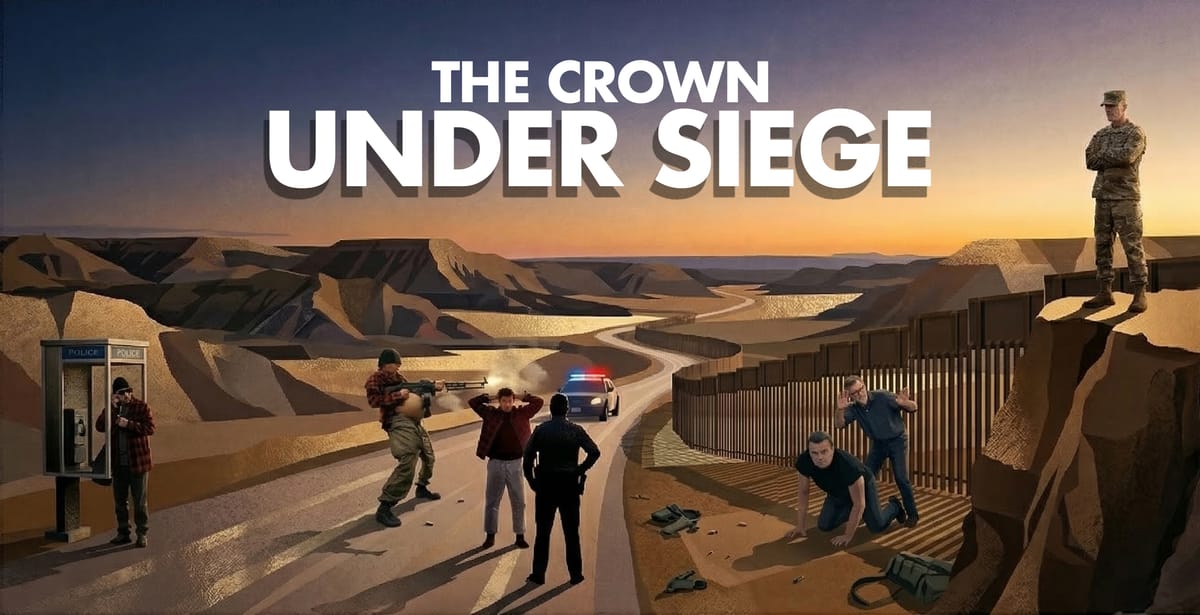
It felt like forever, but we're finally here. It's Oscars night. Despite feeling its length, the Oscars have traditionally been held in March across its 98-year history. In fact, 51 of those 98 ceremonies have been held in March, and through the 1960s to the 1980s, the show was regularly held in early to mid-April. So when the internet collectively groans that this year’s ceremony feels late, it's worth asking: Is our exhaustion with awards season just another symptom of a culture that can't sit with anything longer than a scroll? But fret not, because Awards season is almost over, and we thought we'd seen it all.
From the early batches of winners and early favorites, to the emergence of clear frontrunners in multiple races: Sean Penn as Best Supporting Actor for One Battle After Another, Jessie Buckley as Best Actress for Hamnet, Timothée Chalamet as Best Actor for Marty Supreme, Paul Thomas Anderson for Best Director for One Battle After Another, and One Battle After Another for Best Picture. Or so we thought. The past month alone has shown us that anything can happen. From the racial slur controversy at the BAFTAs, to Jessie Buckley's disapproval of cats, and Timothée Chalamet's murder of opera and ballet, this awards season, in its final stops, has turned us all on our heads. And Sinners, once modestly seen as a real Best Picture threat and a long shot to actually win, has now seemingly ridden a huge wave of late-breaking support like the second coming, emerging as the favorite in key categories, including Best Supporting Actor, Best Supporting Actress, Best Actor, Best Director, and Best Picture.
A lot of the trades and outlets have already written their pieces, their pleas for why the culture needs Sinners to win tomorrow night. But this is my late entry, and I'm not here to make a case for the zeitgeist. I'm here to remind the world that PTA's One Battle After Another is the best film of 2025: a film that captures our current moment and its struggles with the humor of a stoner, the pathological rigidity of a military man, and the sanctimonious treachery of a resistance that mirrors the very oppression it claims to oppose. One Battle After Another saw us, took a snapshot, made a caricature, and mocked us for the fuckery this world has become.
The film's greatness lies not in the action, chaos, or spectacle. It is the fact that underneath all of it lives one of the most carefully constructed character studies of recent memory. And at the center of it is Leonardo DiCaprio, delivering a performance so secure from an A-lister that it never shouts. He allows his co-actors to shine while carrying the entire emotional weight of the film in the margins – a nuanced, stoner-paranoid energy that only he can deliver. Bob Ferguson is a believable paranoia of a dad under siege, and DiCaprio never oversells it once.
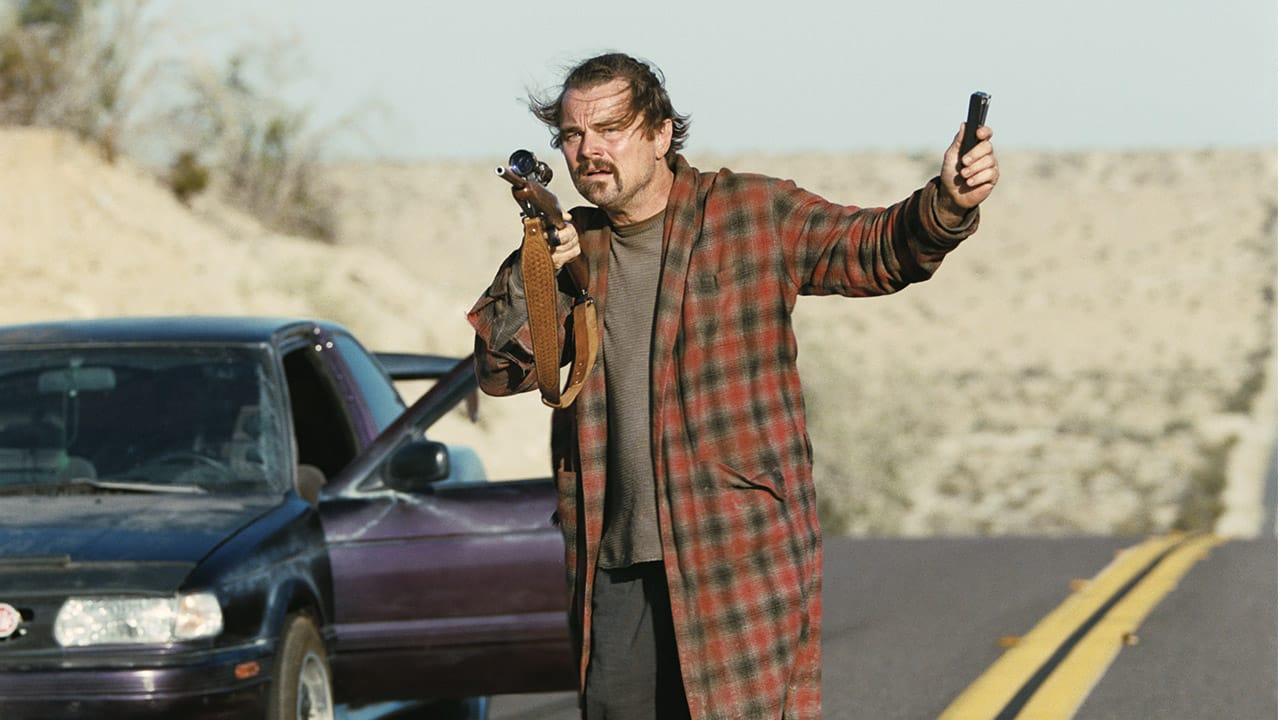
Bob is not a loud protagonist. He is a washed-up man tracking a transformation from resignation to courage, and PTA is patient enough to let that arc breathe beneath the noise. The catalyst is Perfidia's pregnancy, Bob's quiet hope that it would finally pull her out of the revolution and into something resembling a life. It doesn't. She doubles down, postpartum depression and an insatiable hunger for the thrill of the resistance driving her further in, until she walks away entirely, leaving Bob alone with Willa. That abandonment is where the film's real engine starts. Bob does not drive the plot through willpower – he gets dragged by life until something inside him finally turns. PTA gives us a rare "passive-active" protagonist in the truest sense: a man who is acted upon until he isn't. And Sensei's thesis lands with the simplicity of a gut punch: "Courage, Bob. Courage.”
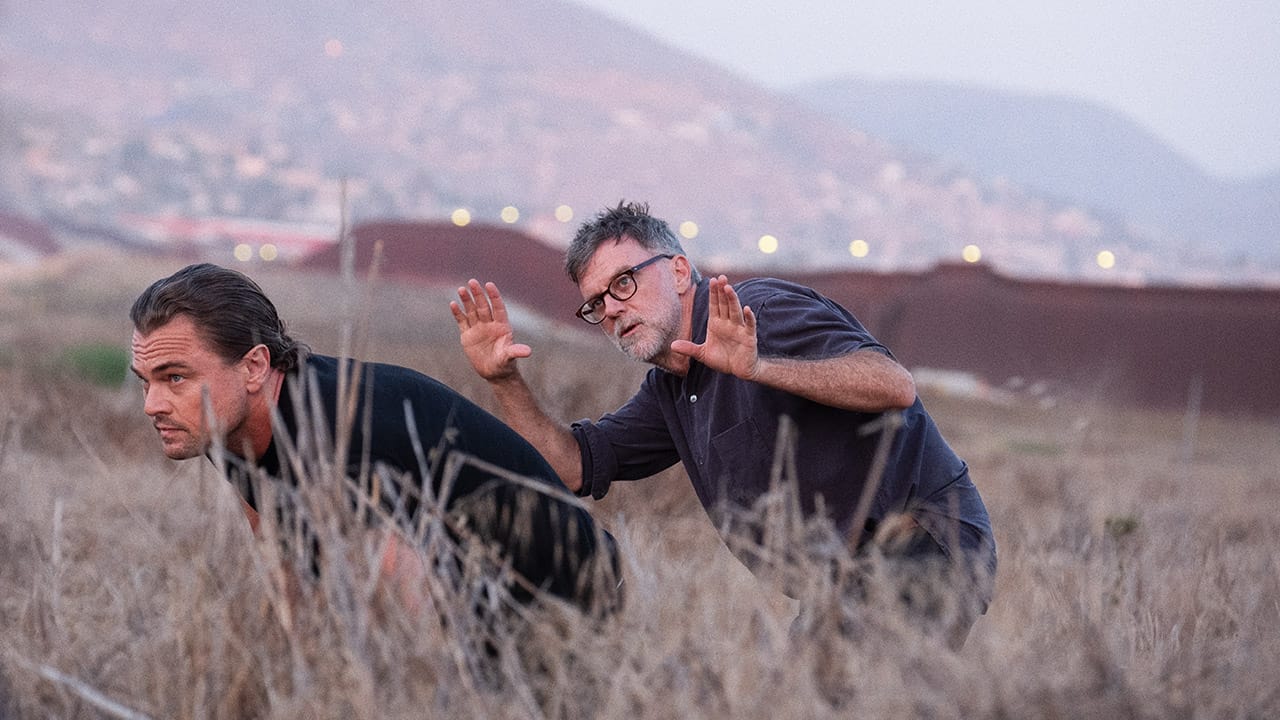
What is equally remarkable is how PTA holds all of this together formally. They say a film is written three times: in development when you put it on the page, in production when you shoot it, and in post-production when you finally decide how it lives on screen. The intercuts in One Battle After Another are proof of that third draft. One beat bleeding into multiple others, chaos folding into chaos, and yet the whole thing moves with an almost musical propulsion. Whether those intercuts were written into the script or shaped in the editing room is a question worth sitting with, because the answer changes how you read PTA's process. Either way, the result is a near-perfect fusion: a film that feels like it was discovered and controlled at the same time. And this alone makes the strongest case for One Battle After Another in the Best Editing conversation. Couple that with Jonny Greenwood's propulsive, anxiety-inducing score and the film's awesome needle drops, and what you have is both a narrative and a filmmaking masterpiece.
One Battle After Another is the film of our time. I was watching the Oscar Expert's predictions yesterday, and one of the pundits drew a distinction: One Battle After Another was timely, and Sinners was timeless. And I'd push back on that. While 'timely' is important, it can be a fad – a film that speaks to the moment and fades with it. Timelessness, on the other hand, is a repercussion of an ongoing cycle. It is a byproduct of a wound that never closed. Let's take a look at the news. Look at the immigration debate. Look at how long this country has been fighting the same battles. This country was built on revolution, the same way Black America, the very soul Sinners is built on, has had to fight and rebuild since before this nation had a name. These are not issues of the moment. They never were. One Battle After Another was loosely based on Vineland, a Thomas Pynchon novel that was already decades old before PTA put it on screen. Several battles may have been won, but the war against inequality, racism, and bias is ongoing. One Battle After Another is not timely. It is timeless. And so is Sinners. So when people say One Battle After Another is not PTA's best as a reason to discount it, that argument doesn't land. Even PTA below his own ceiling is arguably still the strongest directorial work of 2025. And the people who have spent this awards season weaponizing Sinners to take cheap shots at One Battle After Another? That's what's made this exhausting. Coogler deserves better than that, too. A filmmaker of his caliber should win on the merits of his film, not on the weight of a history the Academy failed to correct sooner. And to be clear, this is not about whether Ryan Coogler deserves an Oscar. He does. It's about whether Clayton Davis' argument made this way serves him or reduces him to the thing he's spent his entire career proving he's bigger than. Sinners is not a symbol. Ryan Coogler is not a symbol. And if One Battle After Another wins tomorrow night, it will not be despite the moment. It will be because of it.
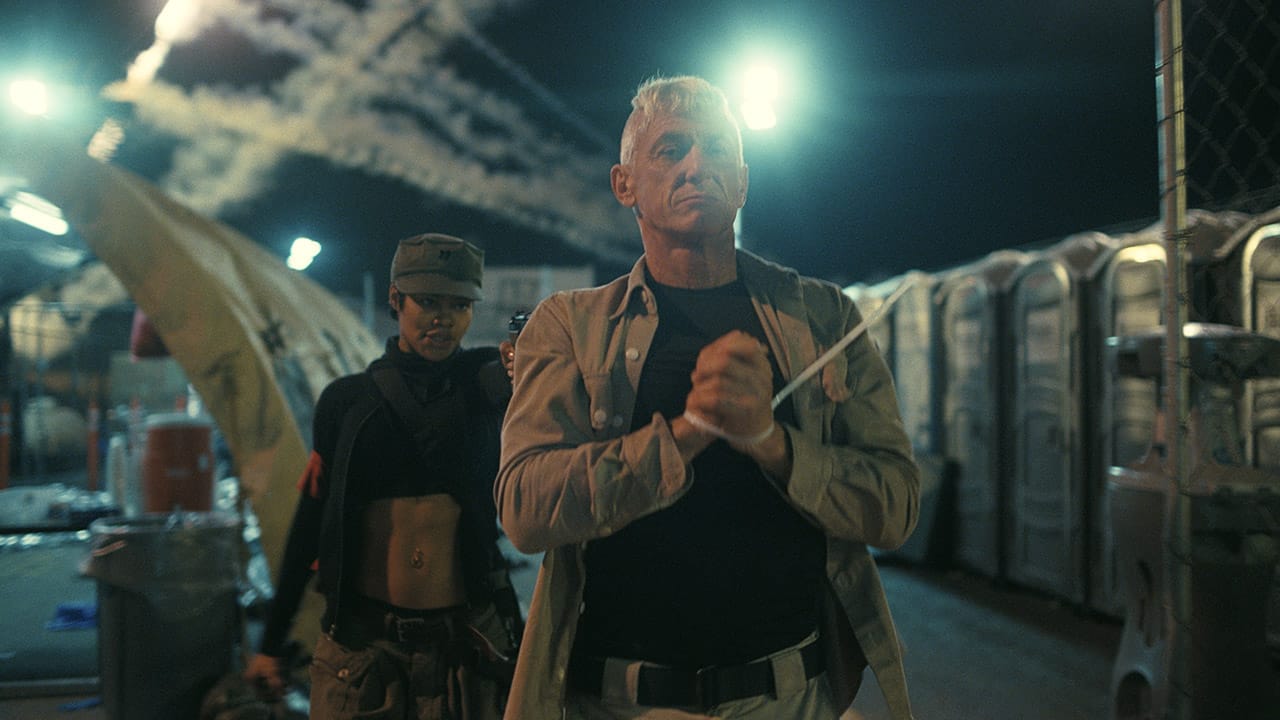
There is one more conversation worth having before tomorrow night. PTA has been historically criticized for lacking diversity in his casting, and that critique is fair. There are also those who took issue with the character of Perfidia Beverly Hills, arguing that she is a negative stereotype, that she sexualizes Black women, that she is not the representation they were looking for. Van Lathan Jr. on the Ringer's Higher Learning podcast took offense to the character. As a Black man, the portrayal of Perfidia didn't sit right with him. And I understand that. But here's what got me: the counterargument came from Jayme Lawson – an actress from Sinners, of all people – who said she wasn't interested in perfect Black representation. That the demand for perfection comes from restriction – from decades of not being heard, not being seen, not being allowed to exist on screen in the full spectrum of human experience. So every image carries the weight of all the images that never existed. I am not a Black woman, nor am I part of the Black community. But as a fellow minority, I know what it is to want your truth on screen. And the truth is, we are not perfect people. Perfidia Beverly Hills is not a perfect person. She is a specific, complicated, fully realized one. And Teyana Taylor's performance is the reason she lives. It is raw, it is dangerous, it is achingly human – and the Oscar for Best Supporting Actress should be hers tomorrow night.
This is not a plea. This comes from a student of the craft, a screenwriter, an immigrant, a person whose group has been villainized and turned into propaganda. But ultimately, I wrote this as a lover of cinema. And as a lover of cinema, One Battle After Another is the rare film that operates on every level simultaneously: as a stoner comedy, as a political thriller, as a character study, as a formal masterpiece. It is a film that trusts its audience enough to hold contradiction, to laugh at the absurdity of oppression while never losing sight of its cost. The Academy has a bad habit of rewarding not the best work, but the weight of a career, giving the gold to years of excellence rather than the film in front of them. PTA has been that filmmaker for decades, nominated fourteen times and walking away empty-handed every time. But that is not why One Battle After Another should win tomorrow night. It should win because it is the best film of 2025. Because it speaks the truth of millions of people who want their revolution to be heard and won – The immigrants and resisters. The ones who keep fighting wars that were never supposed to last this long. This film saw them. And the Academy should, too.
Comments ()